
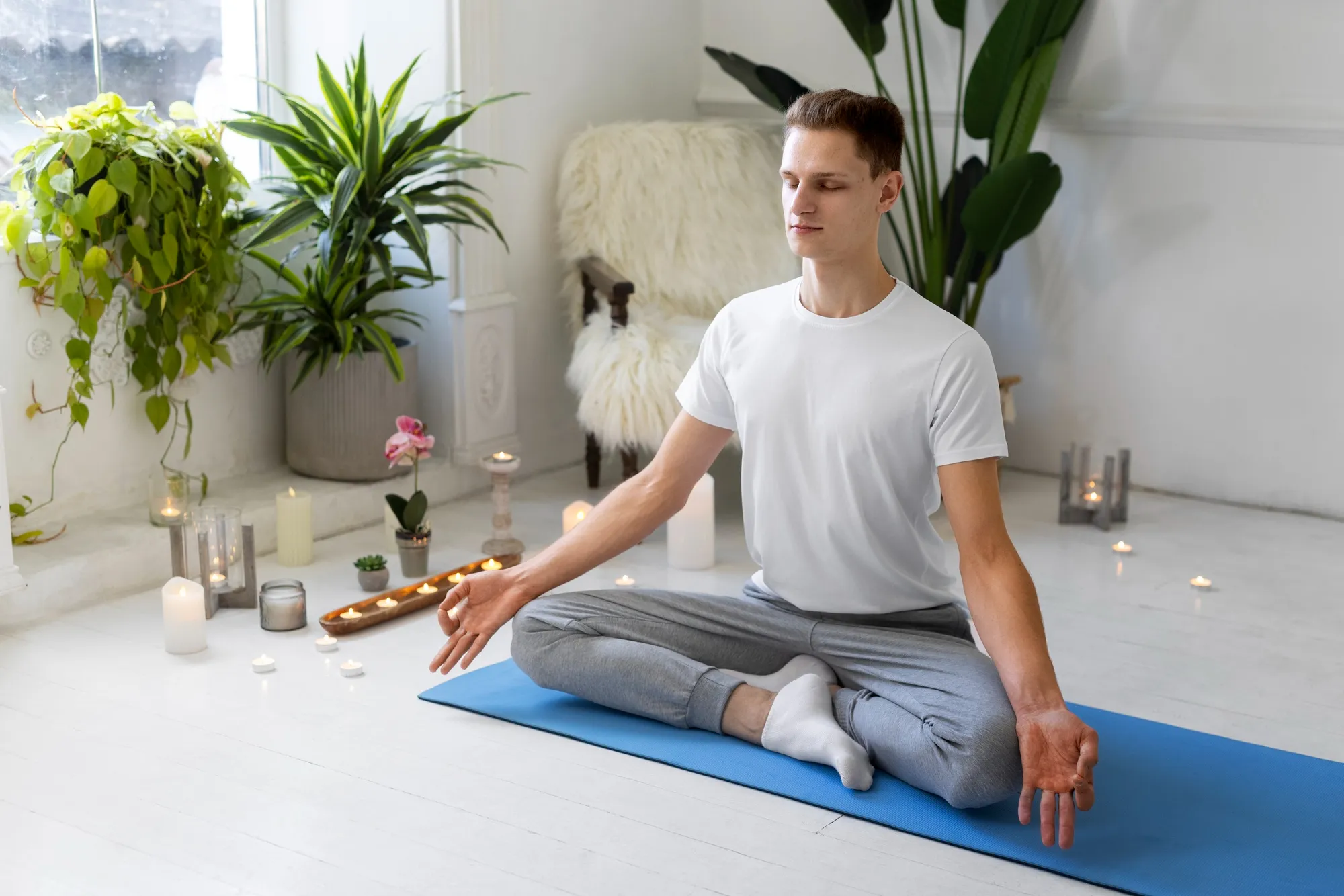
Stress has become the default state of modern life. Packed schedules, constant availability, and the quiet pressure to always perform. The nervous system rarely gets the chance to truly switch off—and eventually, the body pays the price.
Meditation is one of the few practices that not only eases the symptoms of stress but addresses its root cause: the way you relate to your own mind.
What Happens in the Brain During Chronic Stress?
Chronic stress keeps the brain in a state of constant alertness. The amygdala—the brain’s fear center—remains overactive, while the prefrontal cortex, responsible for clear and rational thinking, becomes less influential.
The result is familiar to many: racing thoughts, sleep problems, irritability, and the feeling of losing control.
Research from Harvard Medical School has shown that regular meditation can measurably reduce activity in the amygdala in as little as eight weeks. At the same time, the prefrontal cortex becomes stronger—literally and measurably.
Three Meditation Practices, One Goal: Inner Calm
Not every meditation technique works equally well for every person. In individual sessions with me, we identify the approach that best fits your situation and goals.
Here is an overview of what each practice offers.
Focus Meditation: Interrupting the Stream of Thoughts
When we are stressed, the mind often gets trapped in repetitive thinking. Focus Meditation trains the ability to step out of that cycle.
You place your attention on a single anchor—usually the breath—and gently return to it each time the mind wanders. This simple act of returning is the practice itself. Over time, it weakens the grip of automatic thoughts and restores a sense of control—not through suppression, but through awareness.
Particularly helpful for: racing thoughts, concentration difficulties, and mental overload.
Body Scan: Recognizing Stress Signals in the Body
Stress often appears in the body before we consciously recognize it: tension in the neck, tightness in the chest, restlessness in the legs.
The Body Scan trains you to notice these signals early. You move your attention systematically through the body, observing sensations without judgment and allowing tension to soften naturally. This process directly activates the parasympathetic nervous system—the body’s rest-and-recovery response.
Particularly helpful for: physical symptoms of stress, sleep difficulties, and feeling disconnected from the body.
Metta Meditation: Quieting the Inner Critic
Many people under stress place additional pressure on themselves through self-criticism, feelings of inadequacy, or constant comparison with others.
Metta Meditation addresses this pattern directly. Instead of trying to silence the inner critic, you cultivate kindness and goodwill—beginning with yourself. You offer warmth where there was previously judgment.
Meta-analyses have shown that loving-kindness meditation can significantly reduce anxiety, depression, and emotional exhaustion.
Particularly helpful for: self-criticism, emotional fatigue, social anxiety, and burnout prevention.
Frequently Asked Questions About Meditation and Stress
How Long Do I Need to Meditate Before It Works?
Even 10 minutes a day can produce measurable benefits after three to four weeks. Consistency matters far more than duration. A short daily practice is significantly more effective than occasional long sessions.
Can I Start Meditating When I’m Already Highly Stressed?
Absolutely—and that is often when meditation is most valuable.
During periods of high stress, the nervous system needs a reliable anchor. Learning with guidance can make the process much easier because you do not have to figure everything out on your own.
Is Meditation a Substitute for Therapy?
No. Meditation and psychotherapy complement one another, but they are not interchangeable.
I work as a meditation teacher, not a therapist. For clinical conditions such as depression or anxiety disorders, professional therapeutic support is essential. Meditation can serve as a valuable complementary practice alongside treatment.
Ready to Take the First Step?
Stress does not disappear simply because we ignore it. But our relationship to stress can change when we learn new ways of responding to it.
A free 15-minute introductory call with me will help you understand whether meditation coaching is right for you and how it can support your personal goals.